
Is Homemade Baby Food Really Better? Facts to Know Before You Start
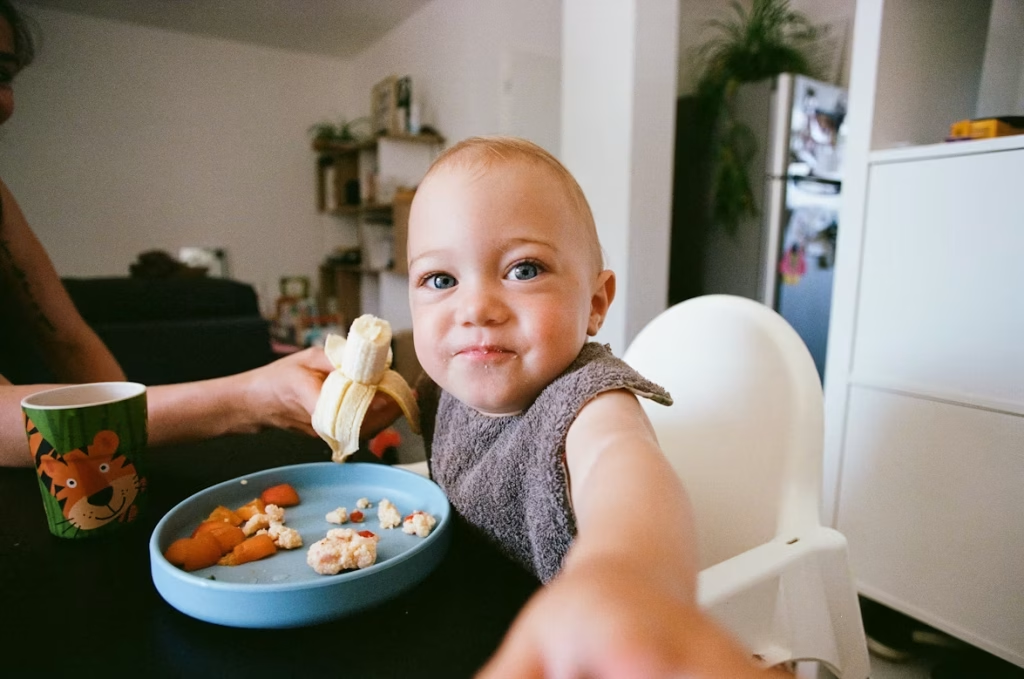
Feeding a baby seems straightforward until it becomes part of your daily routine. At first, packaged baby food feels like the easiest solution. It’s convenient, widely available, and designed to save time. But the more you pay attention, the more questions begin to surface.
What’s actually inside these products? How are they processed? Is convenience worth the uncertainty? For many parents, this curiosity leads to a quiet shift toward homemade food. Not because it’s perfect, but because it offers something essential: control over ingredients, preparation, and how food fits into a baby’s early development.
Once that shift happens, feeding becomes less about following a system and more about building one that works in real life.
Why Parents Are Questioning Store-Bought Baby Food
This shift is not just instinctive. It is shaped by growing research and ongoing concerns.
A study reported by News Medical found that processed baby foods and infant formula may contain measurable levels of heavy metals. These include cadmium, lead, mercury, and arsenic.
Even in small amounts, these substances can interfere with organ development. They have also been linked to neurocognitive and behavioral disorders, intellectual disability, and, in some cases, cardiovascular and respiratory issues in infants.
There are also concerns about certain formula products being associated with Necrotizing Enterocolitis, a serious intestinal condition. These concerns have extended into legal action, referred to as the NEC lawsuit.
In these legal proceedings, parents allege that some formulas increase the risk, yet they failed to provide adequate warnings. According to TorHoerman Law, the risks appear to be higher in premature babies.
This does not mean every packaged product is unsafe. But it does introduce uncertainty. And when it comes to infant nutrition, even a small doubt is enough to make many parents reconsider their approach.
Homemade Can Be a Great Option, If You Get the Timing Right
Before diving into homemade baby food, it’s important to understand that timing matters just as much as what you prepare. Most experts suggest introducing solids around six months, while starting before four months is generally not advised. Even after solids are introduced, breast milk continues to provide the majority of a baby’s nutrition.
At this stage, feeding is less about replacing milk and more about gradual exposure. Babies are learning how to handle food, explore new tastes, and adjust to different textures. Because of this, meals should be simple, soft, and easy to digest rather than complex or heavily varied.
As babies grow, especially around eight months, their ability to chew and manage food improves. This allows for thicker textures and soft finger foods to be introduced safely. It also becomes important to offer a more balanced mix of foods. Including protein along with fruits and vegetables helps support steady growth, development, and overall nutritional needs.
Simple Homemade Foods That Actually Work on Busy Days
Homemade baby food can feel like extra work at first, but it gets much easier once you keep things simple. Most meals can be made with everyday ingredients you already have at home, without special products or complicated recipes.
A soft rice and lentil mash is a great starting point because it provides both carbohydrates and protein, while being gentle on digestion. You can also begin with simple mashed vegetables like carrots, sweet potatoes, or squash, and combine them later for variety.
On busier days, options like mashed banana or avocado require no cooking and still provide good nutrition. As your baby grows, you can introduce slightly more texture with foods like soft pastina in broth or oats mixed with fruit. The focus should not be on constant variety but on building a few reliable, nourishing meals that fit easily into your routine.
Storing and Freezing Without Complicating the Process
Now that we’ve covered which homemade foods are good for babies, you might be wondering how well they can be stored. Once you get storage right, homemade baby food becomes much easier to manage.
According to the Academy of Nutrition and Dietetics, leftovers should be stored in the refrigerator for one to two days. If you do not plan to use the prepared food within that time, it should be transferred to the freezer. When stored properly, homemade baby food can last in the freezer for up to three months without major loss of quality.
Freezing in small portions, such as ice cube trays, makes feeding more flexible and practical. You can defrost only what you need, which helps reduce waste and saves time during busy days.
Labeling and dating each portion also helps you stay organized and ensures food is used within a safe timeframe. It is important not to refreeze food once it has been thawed.
When choosing storage containers, avoid plastics. Glass or stainless steel is a safer option. Clean preparation and proper cooking complete the process and help keep your baby’s food safe.
FAQs
Can I feed my 4-month-old baby solids?
Most babies aren’t ready for solids at four months, as their digestive system and swallowing skills are still developing. Health bodies like the World Health Organization recommend exclusive breastfeeding or formula until six months. Starting too early may increase choking and allergy risks.
Is it okay to feed store-bought food to a baby?
Yes, store-bought baby food can be safe and convenient if you choose trusted brands and check labels carefully. Look for options without added sugar, salt, or preservatives. Still, it’s good to combine packaged food with fresh meals for better variety and nutrition.
What is the best home food for babies?
Simple, soft, and freshly prepared foods work best for babies starting solids. Options like mashed banana, pureed vegetables, or well-cooked rice are gentle on the stomach and easy to digest. Introduce one food at a time to watch for allergies and build tolerance gradually.
At its core, homemade baby food isn’t about avoiding convenience, but about changing what convenience means for you.
When concerns about packaged baby food arise, many parents look for more certainty in what they feed their child. Homemade food offers that certainty. It provides control, flexibility, and a clearer understanding of what goes into each meal.
At the same time, it does not need to be complicated. Simple ingredients, basic preparation, and a little planning are enough to make it work, even on busy days.
In the end, the question is not whether homemade baby food is perfect. It is whether it helps you feel more confident in your choices. For many parents, that confidence is reason enough to start.

Leave a Reply